
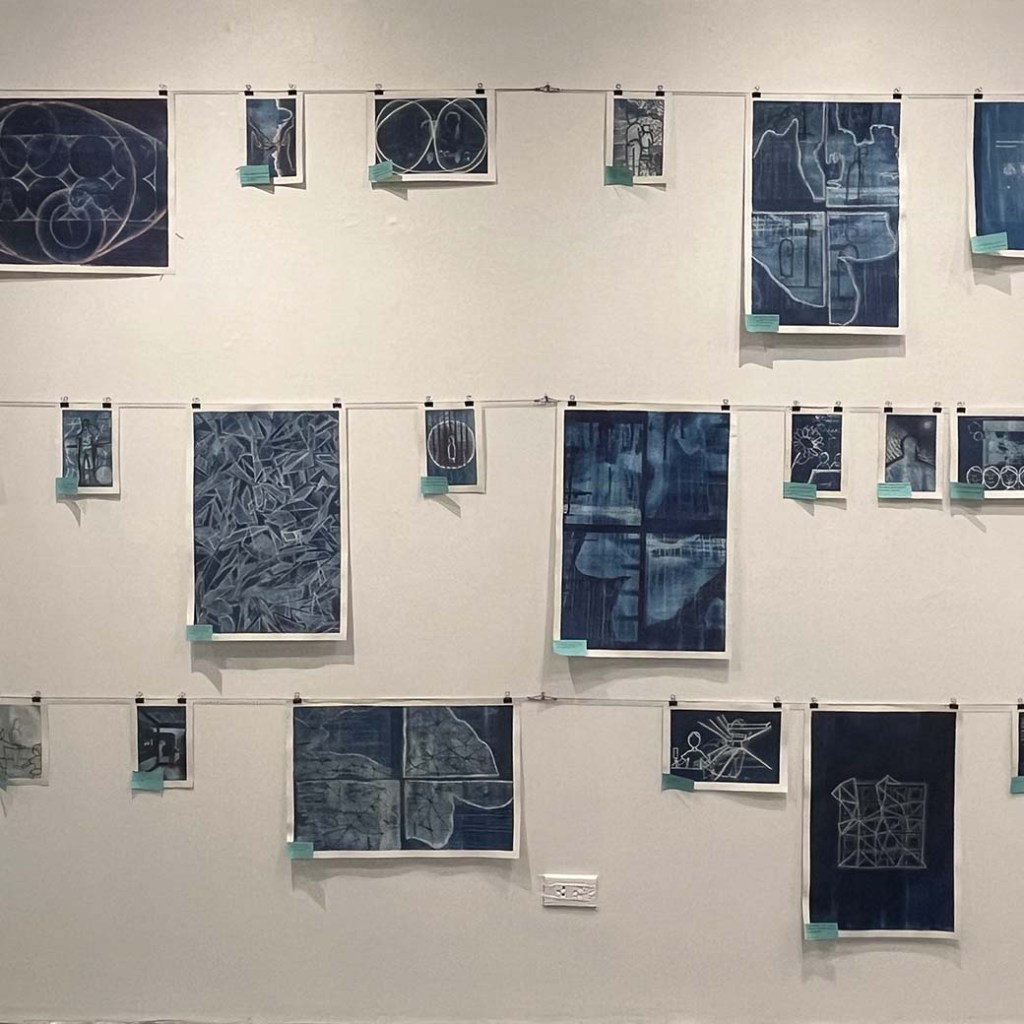
Dementia, classified as an irreversible and progressive neurodegenerative disease by the World Health Organisation (WHO), poses the social stigma surrounding individuals with dementia is a pervasive worldwide issue, influenced by factors such as gender, age, education level, religiosity, cultural differences, and the severity of cognitive disorders. Palliative care is applicable for people with dementia. However, they are less likely to access due to lack of decisional capacity and proxy decision. Stigmatisation can lead to rejection, discrimination, and exclusion from various aspects of social life. Hence, there should be a social awareness regime in the context. The objective is to reflect the awareness raise in the context of Thailand (from the exhibition). Art-based approaches have the unique capacity to shift perceptions on ageing and dementia, overcome language.
The “Healing Light Exhibition”, held at Palette Art Space in Bangkok, Thailand from December 7th to December 18th, 2023, created an engaging conversational space with diverse audiences, including doctors, informal caregivers, artists, and students. Use healing light exhibition as the main case study for the exploratory study to reflect and explore the conversation and impact of art and awareness in the context of Thailand. Autoethnography is used as an approach to research and writing that seeks to describe and systematically analyze (graphy) personal experience (auto) in order to understand cultural experience (ethno). Fieldnotes and sketches were written and analysed as themes to illustrate new perspectives on personal experience.
The exhibition focused on discussions about dementia and personal perspectives, with a specific emphasis on self-definition and societal constructs. Emotional aspects and the therapeutic potential of art in dementia care design are often overlooked by designers and architects who predominantly focus on the physical aspects of dementia. Thus, there exists a gap between individuals with dementia and the norm that deserves attention. Recommendations include further exploration of art mediums, environments and public engagement. Future research is required to understand the impact, to improve and the long-term awareness of innovative arts-based approaches in palliative care introduction in the context of Thailand.

 Dr.honeyyanisa (DEMENTIA/DISABILITY/DESIGN)