
People with dementia often face difficulties because the condition affects the parts of their brain responsible for processing visual information received through their eyes. As people age, various changes impact both vision and colour perception, making walking surfaces potentially hazardous. Additionally, some individuals with dementia may experience hallucinations due to visual perceptions.
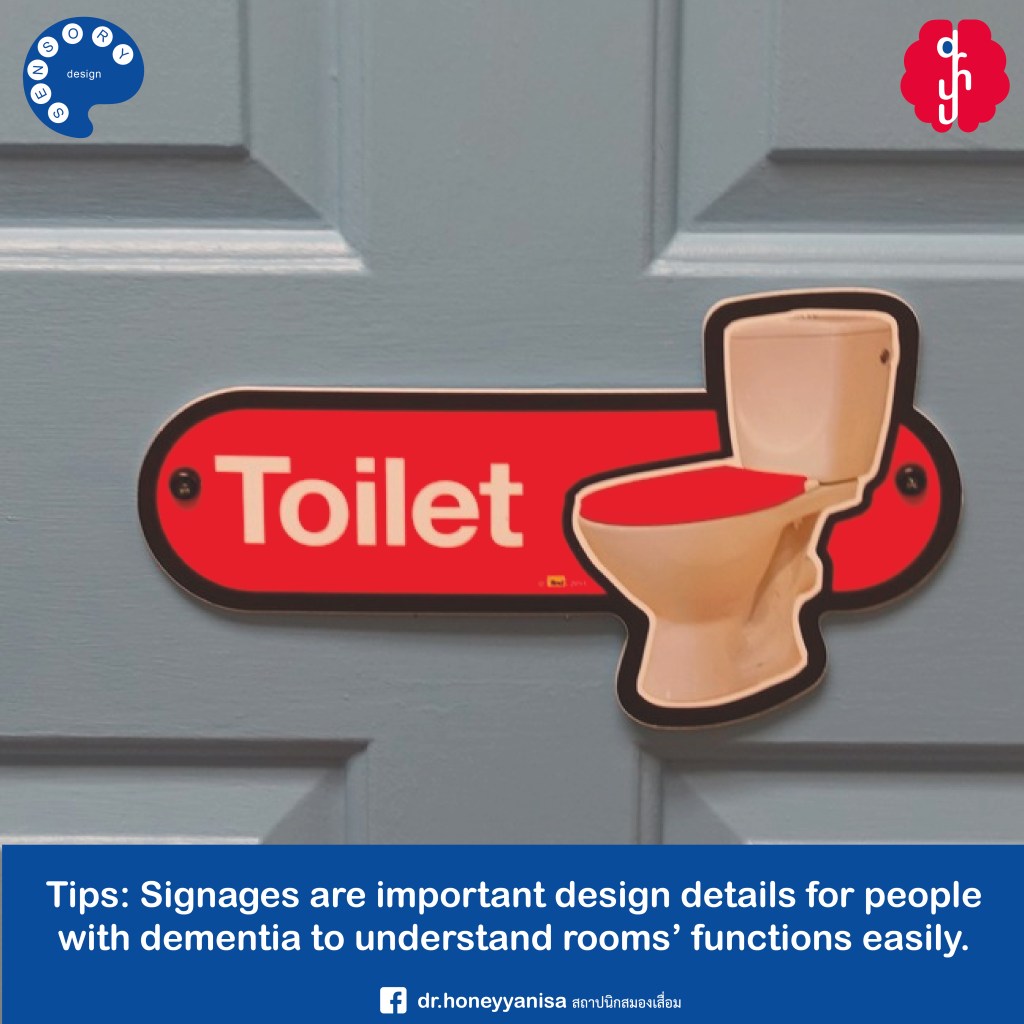
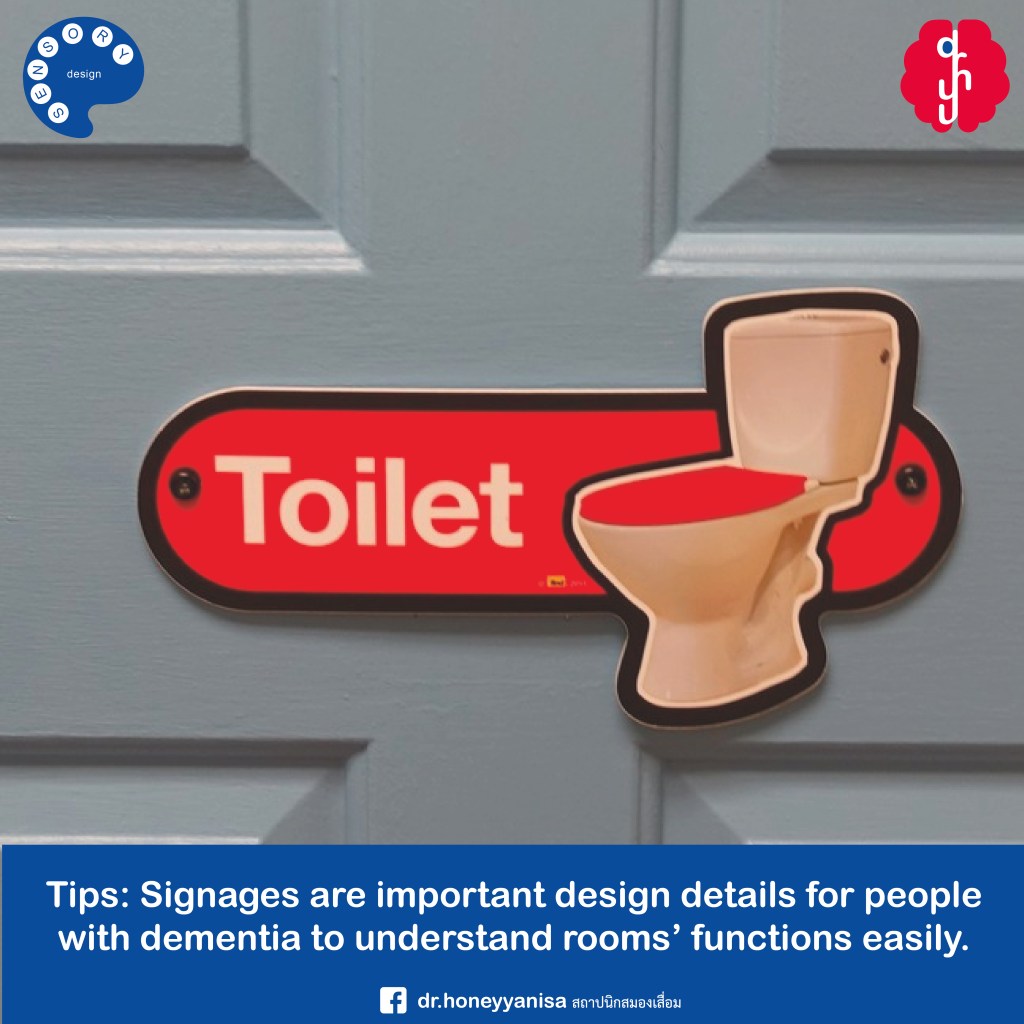
Colour coding is one of an effective approach for wayfinding cues to distinguish between different rooms and buildings. Implementing dementia signage can significantly benefit people living with dementia by promoting independence, confidence, and well-being. Signage design plays a crucial role in supporting individuals with dementia, which can help people with dementia to navigate in their environments, maintain independence, and reduce confusion and anxiety. Here are some key considerations for signage design in relation to dementia:
- Signage design should be clear and simple to be easily understood and interpreted by individuals with dementia. Use clear and simple language with large, legible fonts. Avoid using complex or abstract symbols that may be confusing or unfamiliar.
- Signage design should consider colour contrast. Incorporate high colour contrast between text and background to improve visibility and readability. Choose colours that are easily distinguishable, and avoid colour combinations that may cause confusion or blending.
- Signage design should utilise clear and universally recognisable icons or symbols to convey information. Ensure that the icons are consistent, meaningful, and easy to interpret. In facilities with a diverse population, consider incorporating multilingual signage or using pictorial representations to accommodate individuals with different language abilities or cultural backgrounds.
- Signage design should consider location and placement. Position signage at eye level and in prominent locations where it can be easily noticed. Place signage near relevant landmarks or points of reference to aid in navigation. Ensure that signs are well-lit and not obstructed by objects or excessive visual clutter.
Remember, when designing signage for individuals with dementia, it’s essential to involve and gather feedback from individuals with dementia, caregivers, and professionals with expertise in dementia care to ensure that the signage meets their specific needs and preferences.
.
ประโยชน์ของ Visual Signage
.
ผู้ที่มีภาวะสมองเสื่อมมักประสบปัญหาเนื่องจากภาวะนี้ส่งผลต่อส่วนต่างๆ ของสมองที่รับผิดชอบในการประมวลผลข้อมูลภาพที่ได้รับผ่านดวงตา เมื่ออายุมากขึ้น การเปลี่ยนแปลงต่างๆ ส่งผลกระทบต่อทั้งการมองเห็นและการรับรู้สี ทำให้พื้นผิวที่เดินอาจเป็นอันตรายได้ นอกจากนี้ บุคคลที่มีภาวะสมองเสื่อมบางรายอาจมีอาการประสาทหลอนเนื่องจากการรับรู้ภาพ
การใช้รหัสสีเป็นวิธีการหนึ่งที่ใช้ได้ผลในการระบุทิศทางเพื่อแยกความแตกต่างระหว่างห้องและอาคารต่างๆ การนำป้ายบอกภาวะสมองเสื่อมมาใช้จะเป็นประโยชน์อย่างมากต่อผู้ที่เป็นโรคสมองเสื่อมโดยการส่งเสริมความเป็นอิสระ ความมั่นใจ และความเป็นอยู่ที่ดี การออกแบบป้ายมีบทบาทสำคัญในการสนับสนุนบุคคลที่มีภาวะสมองเสื่อม ซึ่งสามารถช่วยผู้ที่มีภาวะสมองเสื่อมสามารถนำทางในสภาพแวดล้อมของตน รักษาความเป็นอิสระ และลดความสับสนและความวิตกกังวล ต่อไปนี้เป็นข้อพิจารณาที่สำคัญบางประการสำหรับการออกแบบป้ายที่เกี่ยวข้องกับภาวะสมองเสื่อม:
- การออกแบบป้ายควรมีความชัดเจนและเรียบง่ายเพื่อให้บุคคลที่มีภาวะสมองเสื่อมเข้าใจและตีความได้ง่าย ใช้ภาษาที่ชัดเจนและเรียบง่ายพร้อมแบบอักษรขนาดใหญ่ที่อ่านได้ชัดเจน หลีกเลี่ยงการใช้สัญลักษณ์ที่ซับซ้อนหรือเป็นนามธรรมซึ่งอาจทำให้สับสนหรือไม่คุ้นเคย
- การออกแบบป้ายควรคำนึงถึงความเปรียบต่างของสี รวมความคมชัดของสีสูงระหว่างข้อความและพื้นหลังเพื่อปรับปรุงการมองเห็นและการอ่าน เลือกสีที่สามารถแยกแยะได้ง่าย และหลีกเลี่ยงการผสมสีที่อาจทำให้เกิดความสับสนหรือผสมกัน
- การออกแบบป้ายควรใช้ไอคอนหรือสัญลักษณ์ที่ชัดเจนและเป็นที่รู้จักในระดับสากลเพื่อสื่อข้อมูล ตรวจสอบให้แน่ใจว่าไอคอนสอดคล้องกัน มีความหมาย และตีความได้ง่าย ในสถานประกอบการที่มีประชากรหลากหลาย ให้พิจารณารวมป้ายหลายภาษาหรือใช้ภาพแทนเพื่อรองรับบุคคลที่มีความสามารถทางภาษาหรือภูมิหลังทางวัฒนธรรมที่แตกต่างกัน
- การออกแบบป้ายควรคำนึงถึงตำแหน่งและการจัดวาง วางตำแหน่งป้ายให้อยู่ในระดับสายตาและในจุดที่สังเกตเห็นได้ง่าย วางป้ายใกล้กับจุดสังเกตที่เกี่ยวข้องหรือจุดอ้างอิงเพื่อช่วยในการนำทาง ตรวจสอบให้แน่ใจว่าป้ายมีแสงสว่างเพียงพอและไม่ถูกบดบังด้วยวัตถุหรือสิ่งกีดขวางทางสายตามากเกินไป
การออกแบบป้ายสำหรับบุคคลที่มีภาวะสมองเสื่อม จำเป็นต้องมีส่วนร่วมและรวบรวมความคิดเห็นจากบุคคลที่มีภาวะสมองเสื่อม ผู้ดูแล และผู้เชี่ยวชาญที่มีความเชี่ยวชาญในการดูแลภาวะสมองเสื่อม เพื่อให้แน่ใจว่าป้ายดังกล่าวตอบสนองความต้องการและความชอบเฉพาะของพวกเขา

 Dr.honeyyanisa (DEMENTIA/DISABILITY/DESIGN)