
Dementia encompasses a decline in brain function that progressively affects daily life. It comprises a combination of various brain syndromes, with symptoms extending beyond mere memory loss or reminiscing about the past. Individuals with dementia may also experience mood swings, confusion, difficulties in communication and reasoning, wandering in familiar places, and exhibiting altered behaviors.
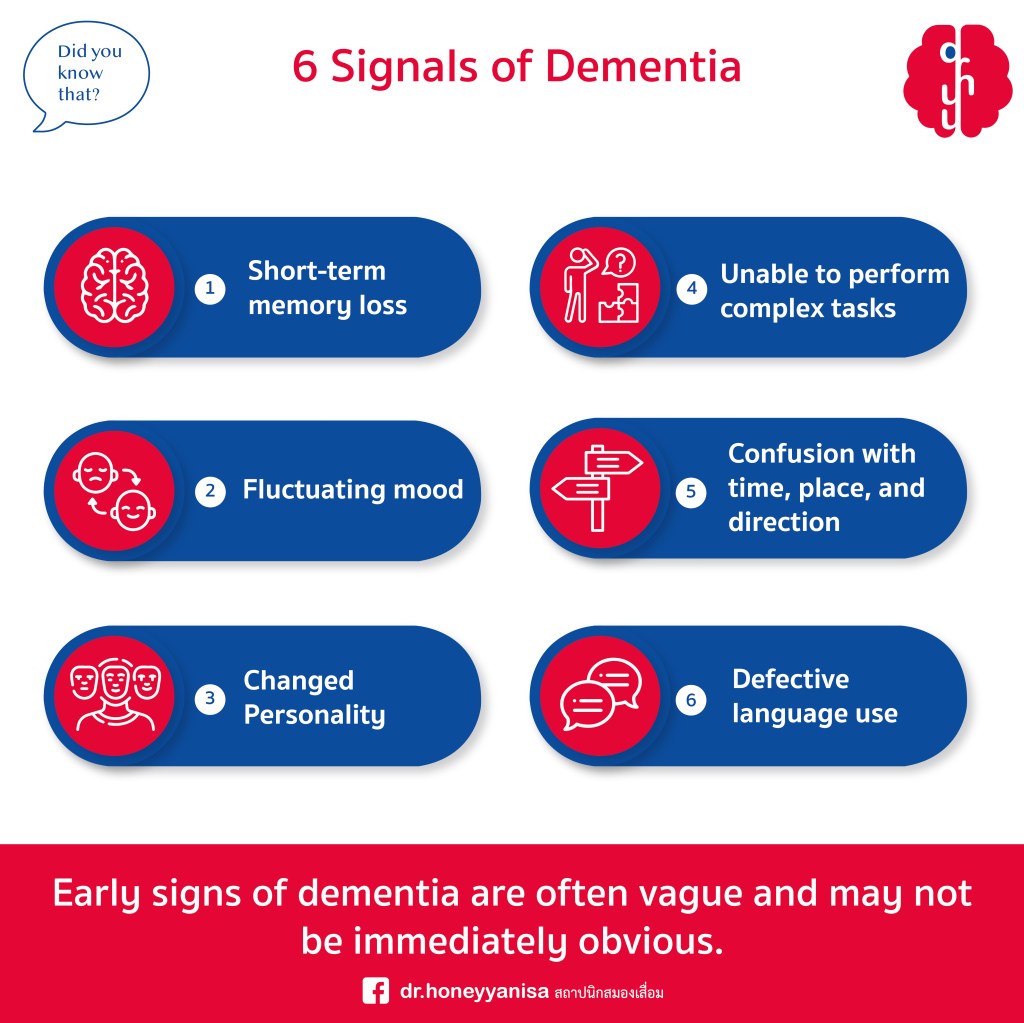
Early signs of dementia often manifest vaguely and may not be immediately noticeable. The specific symptoms and their onset can vary depending on the type of dementia and the individual. A diagnosis of dementia is typically made when two or more of these symptoms interfere with daily functioning. Six main signs of dementia include:
- Short-term memory loss that hampers activities of daily living (ADLs) such as eating, bathing, walking, using the bathroom, dressing, and self-care.
- Inability to perform complex everyday tasks such as managing finances or household responsibilities.
- Mood swings characterized by noticeable changes in emotional responses, with individuals having less control over their feelings and actions.
- Confusion regarding time and location, leading to getting lost even in familiar surroundings like one’s own home.
- Personality changes or the emergence of uncharacteristic or aggressive behaviors.
- Impaired language use, including difficulties in finding or recalling words during conversations.
It is crucial for individuals experiencing any of these signs to seek diagnosis and professional medical guidance. Early detection enables appropriate and timely treatment and care.
.
สัญญาณเริ่มต้นของภาวะสมองเสื่อม
ภาวะสมองเสื่อมเป็นภาวะการทำงานของสมองที่ถดถอยลง จนส่งผลกระทบต่อชีวิตประจำวัน ประกอบด้วยกลุ่มอาการของสมองหลายๆ อย่างรวมกัน อาการของภาวะสมองเสื่อมไม่ได้มีแค่การสูญเสียความทรงจำ หรือจำได้แต่เพียงภาพในอดีตเท่านั้น ยังมีความแปรปรวนของภาวะด้านอารมณ์ ความสับสน ปัญหาเกี่ยวกับการสื่อสารและการใช้เหตุผล การเดินหลงในที่ที่คุ้นเคย หรือมีพฤติกรรมที่แตกต่างออกไป เป็นต้น
สัญญาณเริ่มต้นของภาวะสมองเสื่อมนั้นมักจะคลุมเครือ และอาจไม่ชัดเจนในทันที อาการในระยะเริ่มต้นยังขึ้นอยู่กับประเภทของภาวะสมองเสื่อมและแตกต่างกันไปในแต่ละบุคคล บุคคลที่จะได้รับการวินิจฉัยมักจะต้องมีอาการเหล่านี้ตั้งแต่ 2 อาการขึ้นไป ซึ่งอาจจะรบกวนการใช้ชีวิตประจำวัน สัญญาณโดยรวมของภาวะสมองเสื่อมจะมี 6 อาการหลัก ได้แก่
1. การสูญเสียความทรงจำระยะสั้น จนมีผลกระทบต่อการประกอบกิจวัตรประจำวัน (ADLs) เช่น การรับประทานอาหาร การอาบน้ำ การเดิน การเข้าห้องน้ำ การแต่งตัว และการดูแลตัวเอง
2. การทำกิจกรรมที่ค่อนข้างซับซ้อนในชีวิตประจำวันไม่ได้ เช่น การจัดการบิลและการเงิน หรือการดูแลครัวเรือน
3. อารมณ์ที่แปรปรวน ซึ่งมักพบเห็นจากการเปลี่ยนแปลงในการตอบสนองทางอารมณ์ โดยจะควบคุมความรู้สึกและวิธีแสดงออกได้น้อยลง
4. อาการสับสนในเวลา สถานที่และการหลงทิศทาง ในสถานที่ที่คุ้นเคย เช่น บ้าน
5. การมีบุคลิกภาพที่เปลี่ยนไป มีพฤติกรรมที่ไม่เคยเป็นมาก่อน หรือมีพฤติกรรมที่ก้าวร้าว
6. การใช้ภาษาที่บกพร่อง หรือการลืมคำศัพท์ระหว่างพูดคุย
ทั้งนี้แต่ละสัญญาณจะขึ้นอยู่กับแต่ละบุคคล และระยะของภาวะสมองเสื่อม ซึ่งเป็นสิ่งที่จำเป็นอย่างมากที่ต้องได้รับการวินิจฉัยจากแพทย์ผู้เชี่ยวชาญ เพื่อการรักษาและดูแลอย่างถูกต้องและทันท่วงทีค่ะ
.
อ้างอิง
- http://www.nia.nih.gov/health/what-are-signs-alzheimers-disease
- Cipriani, G., Danti, S., Picchi, L., Nuti, A., Fiorino, M. D. (2020) Daily functioning and dementia. Dement Neuropsychol. doi: 10.1590/1980-57642020dn14-020001.
- Duong, S., Patel, T. and Chang, F. (2017) Dementia: What pharmacists need to know. Can Pharm J (Ott), 150, 118-129.

 Dr.honeyyanisa (DEMENTIA/DISABILITY/DESIGN)