
On June 20th, we had the opportunity to attend an art therapy training session for people with dementia at the dementia day center, situated on the 15th floor of the Chulalongkorn Hospital building. The center aims to provide caregivers of individuals with dementia with knowledge and skills to enhance their caregiving abilities.
In collaboration with the Association of Art Therapists of Thailand, we had the privilege of facilitating a workshop that aimed to teach caregivers the transformative power of art for healing and self-care. Caregivers often experience significant stress and concerns about their ability to provide the best possible care. Art therapy, as defined, utilises art as a primary tool for addressing both physical and mental well-being. It offers a unique opportunity for individuals to discover their identity and reflect on unexpected journeys that unfold during the caregiving process.
The initial activity involves a scribble exercise, designed to provide a sense of release and freedom. To begin, participants are encouraged to select a color, as colors hold significant implications in expressing emotions. They can choose a color that resonates with their current mood, allowing them to engage in the activity without overthinking or setting expectations.
The subsequent step entails drawing with their non-dominant hand, serving as a brain exercise that promotes cognitive stimulation. After creating the lines, participants are then encouraged to employ analytical thinking, envisioning living creatures and contemplating ways to weave a narrative or story around the drawn lines. This process enables the release of the imagery as a captivating story, fostering both creativity and personal expression.
The second activity involves creating a body scan through drawing, aiming to facilitate reflection and self-awareness regarding our current physical and mental states. This exercise establishes a connection between the body and the mind, utilizing colors and shapes as a means of recording and reflecting. By employing various colors and shapes (such as using dark green, light green, and blue), we focus on the process rather than aesthetics. This approach allows us to delve into our subconscious and become more conscious of what our body and mind truly need in the present moment, such as a sense of tranquility and balance.
Activity 3 entails a 30-minute session of free-expression art, wherein participants are prompted to create artwork without constraints, using materials of their choice and employing their preferred artistic style. The primary objective of this activity is to cultivate a spontaneous approach, enabling participants to embrace the unfolding creative process, relying on available materials and problem-solving skills, rather than extensive pre-planning.
In essence, this art therapy activity serves as a self-care intervention for caregivers of individuals with dementia, offering an alternative outlet for rejuvenation and solace. The underlying concept revolves around deriving enjoyment from the creative process itself and approaching the activity without predetermined expectations or plans. Participants are encouraged to freely harness their creativity and imagination, allowing their free-expression artworks to organically take form.
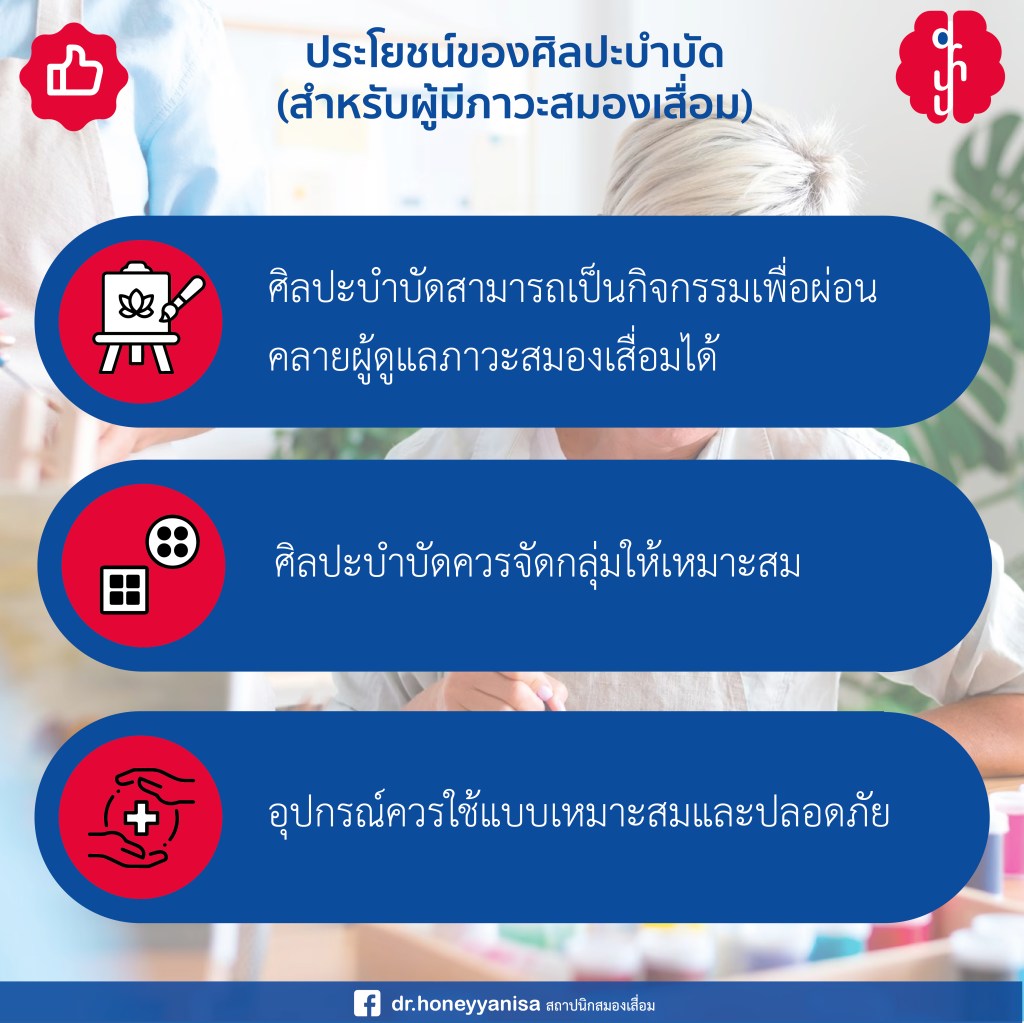
However, when implementing this approach with individuals affected by dementia, it is imperative to consider grouping them based on age, stage of dementia, and individual capabilities. This ensures that the activity remains manageable and does not become excessively complex, thereby mitigating potential feelings of comparison. Additionally, the participation of caregivers in this activity serves as a means of relaxation and provides a platform for them to be heard and understood in an alternative manner.
.
เมื่อวันที่ 20 มิถุนายน ที่ผ่านมา เราได้มีโอกาสได้เข้าร่วมอบรม art therapy สำหรับผู้ดูแลผู้มีภาวะสมองเสื่อม ที่ศูนย์ดูแลสมองเสื่อม หรือdementia day centre ชั้น15 อาคาร โรงพยาบาลจุฬาลงกรณ์ ซึ่งทางศูนย์มีจุดมุ่งหมายในการให้ความรู้กับทางผู้ดูแลผู้มีภาวะสมองเสื่อม
โดยได้ร่วมมือกับทางสมาคมนักศิลปะบำบัดแห่งประเทศไทย เพื่อสอนการใช้ศิลปะในการบำบัดและเยียวยาผู้ดูแล เพราะทางผู้ดูแลส่วนใหญ่จะประสบปัญหาเรื่องความเครียดระหว่างการดูแลและความกังวลต่างๆว่าทำได้เต็มที่แล้วหรือไม่ ตามทำนิยามของ ศิลปะบำบัด หมายความว่า การใช้ศิลปะเป็นสื่อเครื่องมือหลักในการเยียวยารักษาอาการเจ็บป่วยทั้งร่างกายและจิตใจ และสามารถค้นหาตัวตนระหว่างการลงมือทำ เสมือนเป็นการบันทึกการเดินทางที่ไม่ได้มีการคาดหวังในระยะเริ่มต้น
กิจกรรมแรกเป็นกิจกรรมscribble ซึ่งมีหน้าที่ในการให้ปลดปล่อยและให้ความรู้สึกที่เป็นอิสระ ขั้นตอนแรกคือการเลือกสี (สีมีนัยยะสำคัญในการสื่อสารอารมณ์) ซึ่งการได้เขียดเขียนตามอารมณ์ ณ ช่วงเวลานั้นๆ เพื่อทำให้รู้สึกว่าไม่ต้องคิดอะไรมากและไม่คาดหวัง เส้นต่อมาคือการใช้มือที่ไม่ถนัดวาด (เป็นการบริหารสมอง) และหลังจากวาดเส้นเรียบร้อยแล้วจึงใช้ความคิดวิเคราะห์ในการจินตนาการหาภาพสิ่งมีชีวิตและการคิดวิธีการเล่าเรื่อง (narrative)เพื่อเป็นการปลดปล่อยสิ่งที่วาดออกมาเป็นเรื่องราว
กิจกรรมที่ 2 คือการวาด body scan เพื่อการ reflect และสังเกตกายและใจของตัวเองว่า ณ ปัจจุบันนี้เรารู้สึกหรือเป็นอย่างไรบ้าง การสังเกตนี้เป็นการเชื่องโยงระหว่างร่างกายและจิตใจโดยการใช้สีและรูปทรงเป็นการจดบันทึกและสะท้อนออกมา ซึ่งการใช้สีและรูปทรง (เช่นเราใช้สีเขียวเข้ม เขียวอ่อน และฟ้า) เป็นการใช้สีโดยที่ไม่ได้คิดถึงความสวยงามก่อน และสามารถสื่อถึงจิตใต้สำนึกให้เราตระหนักและฉุกคิด ได้ว่าร่างกายและจิตใจตอนนี้ต้องการธรรมชาติ เป็นต้น
กิจกรรมที่ 3 คือโจทย์ทำศิลปะแบบfree-expression ในเวลา 30นาที โจทย์คือ ‘การทำอะไรก็ได้’ โดยการหยิบเลือกวัสดุที่มีและทำงานศิลปะในรูปแบบของตัวเอง ที่ชอบคือผู้เข้าร่วมได้เรียนรู้ที่จะ go with the flow ใช้วัสดุหน้างานและการแก้ไขปัญหาว่าภาพfree expressionของเราจะออกมาเป็นอย่างไรโดยที่ไม่ได้วางแผนมาก่อน
สรุปคือการทำศิลปะบำบัดสำหรับผู้ดูแลผู้มีภาวะสมองเสื่อม เป็นอีกทางเลือกหนึ่งในการฟื้นฟูและเยียวยาผู้ที่เป็นผู้ดูแล โดยแนวคิดที่ได้หลักๆคือความสนุก ณ ช่วงเวลานั้น และการแก้ไขสถานการณ์โดยไม่ได้คาดหวังและวางแผนก่อน โดยใช้ความคิดสร้างสรรค์และจินตนาการหน้างาน แต่ถ้าอยากไปปรับเปลี่ยนเพิ่มเติมในการประยุกต์ใช้กับผู้มีภาวะสมองเสื่อมจะต้องจัดกลุ่มตามอายุ ระยะของภาวะสมองเสื่อม และความสามารถอย่างเหมาะสม เพื่อไม่ให้กิจกรรมซับซ้อนจนเกินไป เกิดการเปรียบเทียบ และการเข้าร่วมกิจกรรมนี้เป็นการผ่อนคลายและสามารถเปิดเป็นพื้นที่สำหรับการรับฟังผู้ดูแลอีกวิธีหนึ่งด้วย

 Dr.honeyyanisa (DEMENTIA/DISABILITY/DESIGN)