
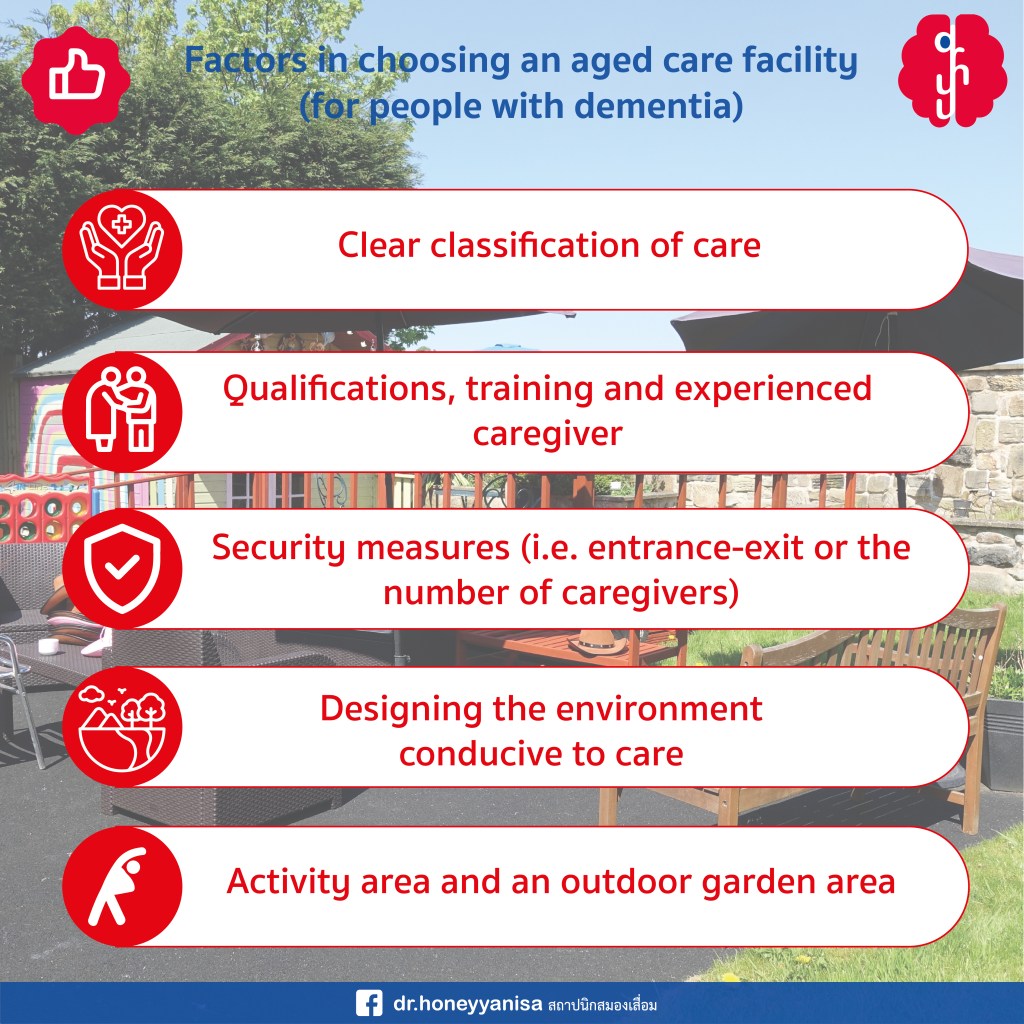
When choosing a suitable care home for people with dementia, several factors should be considered. Here are some of the main factors:
- Clear classification of care: Look for care homes that specialise in providing care for individuals with dementia. These facilities are typically well-equipped with trained staff, specialised programs, and an understanding of the unique needs and challenges associated with dementia.
- Qualifications, training and experienced caregivers: Inquire about the qualifications, training, and experience of the care home’s staff. They should have a good understanding of dementia, including knowledge of effective communication techniques, behavioural management strategies, and person-centered care approaches.
- Security measures: Ensure that the care home has appropriate safety measures in place to prevent wandering and ensure the security of residents. This may include secure entry and exit points, monitoring systems, and staff supervision.
- Design of Enabling Environments: Consider the physical environment of the care home. It should be designed to be dementia-friendly, with clear signage, familiar and comforting cues, well-lit spaces, and safe and accessible facilities, including wheelchair accessibility if needed.
- Activity area and outdoor garden area: Inquire about the activities and programs offered to residents with dementia. Look for care homes that provide meaningful and engaging activities tailored to the individual’s interests and abilities. Social interaction and mental stimulation are essential for the well-being of individuals with dementia.
So, it is essential to visit potential care homes in person, ask questions, and observe the atmosphere and interactions. This allows you to assess if the care home aligns with the specific needs and preferences of the individual with dementia.
.
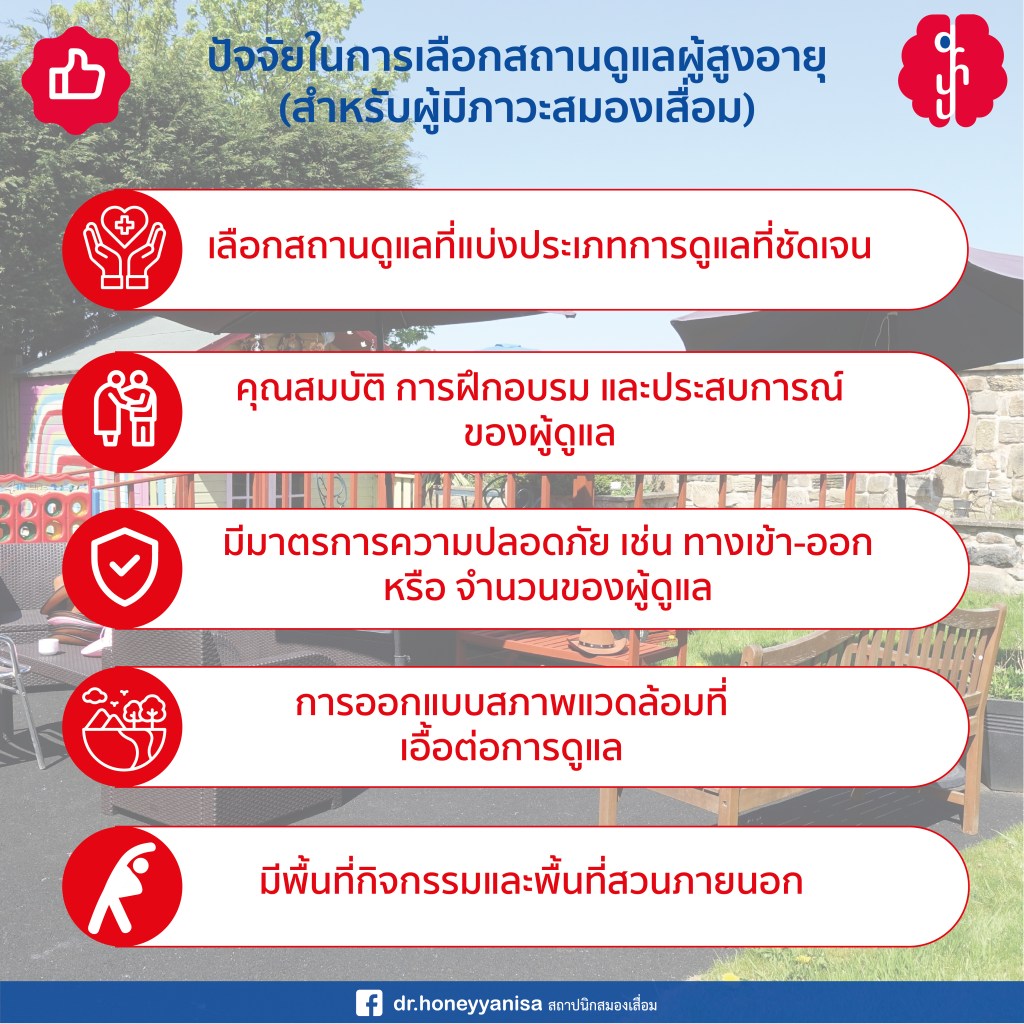
ปัจจัยในการเลือกสถานดูแลผู้สูงอายุ(สำหรับผู้มีภาวะสมองเสื่อม)
เมื่อเลือกสถานดูแลที่เหมาะสมสำหรับผู้ที่มีภาวะสมองเสื่อม ควรพิจารณาปัจจัยหลายประการ นี่คือปัจจัยหลักบางประการ:
- การจัดประเภทการดูแลที่ชัดเจน: มองหาสถานดูแลที่เชี่ยวชาญในการดูแลผู้ป่วยภาวะสมองเสื่อม สิ่งอำนวยความสะดวกเหล่านี้มักจะเพียบพร้อมไปด้วยพนักงานที่ผ่านการฝึกอบรม โปรแกรมพิเศษ และความเข้าใจในความต้องการเฉพาะและความท้าทายที่เกี่ยวข้องกับภาวะสมองเสื่อม
- คุณสมบัติ การฝึกอบรม และประสบการณ์ของผู้ดูแล: สอบถามเกี่ยวกับคุณสมบัติ การฝึกอบรม และประสบการณ์ของเจ้าหน้าที่สถานดูแลเด็ก พวกเขาควรมีความเข้าใจที่ดีเกี่ยวกับภาวะสมองเสื่อม รวมถึงความรู้เกี่ยวกับเทคนิคการสื่อสารที่มีประสิทธิภาพ กลยุทธ์การจัดการพฤติกรรม และแนวทางการดูแลที่เน้นบุคคลเป็นศูนย์กลาง
- มาตรการรักษาความปลอดภัย: ตรวจสอบให้แน่ใจว่าบ้านพักคนชรามีมาตรการความปลอดภัยที่เหมาะสมเพื่อป้องกันการหลงทางและรับประกันความปลอดภัยของผู้อยู่อาศัย ซึ่งอาจรวมถึงทางเข้าและออกที่ปลอดภัย ระบบตรวจสอบ และการดูแลของพนักงาน
- การออกแบบสภาพแวดล้อมที่เอื้ออำนวย: พิจารณาสภาพแวดล้อมทางกายภาพของสถานดูแลเด็ก ควรออกแบบให้เป็นมิตรกับภาวะสมองเสื่อม มีป้ายชัดเจน สัญลักษณ์ที่คุ้นเคยและปลอบโยน พื้นที่ที่มีแสงสว่างเพียงพอ และสิ่งอำนวยความสะดวกที่ปลอดภัยและเข้าถึงได้ รวมถึงทางสำหรับรถเข็นหากจำเป็น
- ลานกิจกรรมและพื้นที่สวนกลางแจ้ง: สอบถามเกี่ยวกับกิจกรรมและโปรแกรมที่มอบให้กับผู้อยู่อาศัยที่มีภาวะสมองเสื่อม มองหาสถานดูแลเด็กที่ให้กิจกรรมที่มีความหมายและมีส่วนร่วมซึ่งปรับให้เหมาะกับความสนใจและความสามารถของแต่ละบุคคล ปฏิสัมพันธ์ทางสังคมและการกระตุ้นทางจิตใจเป็นสิ่งจำเป็นสำหรับความเป็นอยู่ที่ดีของบุคคลที่มีภาวะสมองเสื่อม
ดังนั้นจึงจำเป็นอย่างยิ่งที่จะต้องไปเยี่ยมสถานดูแลเด็กด้วยตนเอง ถามคำถาม และสังเกตบรรยากาศและปฏิสัมพันธ์ สิ่งนี้ทำให้คุณสามารถประเมินได้ว่าสถานดูแลเด็กนั้นสอดคล้องกับความต้องการและความพึงพอใจเฉพาะของบุคคลที่มีภาวะสมองเสื่อมหรือไม่

 Dr.honeyyanisa (DEMENTIA/DISABILITY/DESIGN)